Monday, February 12, 2024, 1:15 PM
Mabry Concert Hall
Austin Peay State University, Clarksville, TN
PROGRAM
Raga No. 1 (1968) | Bill Cahn (b. 1946)
timpani
how sweet the thought of you as infinite (2019) | Emma O’Halloran (b. 1985)
marimba and electronics
Being Black (2020) | Joe W. Moore III (b. 1986)
I. Being Black and Walking
II. Being Black in a Hoodie
III. Being Black at the Store
IV. Being Black and Running
V. Being Black and not Being…
multiple percussion
Histoire du Tango (1985) | Astor Piazzolla (1921-1992)
Bordel, 1900
marimba, Lisa Wolynec, flute
PROGRAM NOTES
Raga No. 1 | Bill Cahn
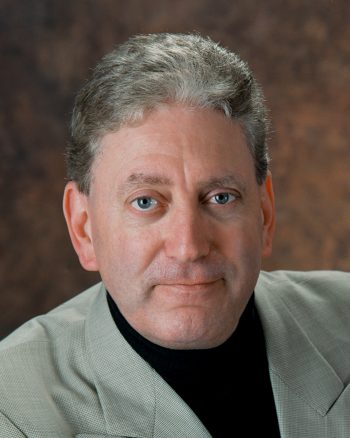
In Indian musical theory and practice a rāga is a melody used for expressing inner beauty and religious devotion. Raga No. 1 is based on a four note melody that incorporates stylistic traits and techniques of the tabla, the traditional drums of North Indian classical music. Tabla is a set of two drums, the dayan (right) and bayan (left). Formally, the piece is in modified sonata form. After a brief introduction the pitches of the raga are slowly introduced in succeeding sections. In the slower middle section, one hand plays a tremolo with the fingers while the other hand uses a mallet to play a series of glissandi that imitates the melismatic vocal characteristics of Indian music. Other extended techniques employed in Raga No. 1 include strokes played in the center of the head, playing with the hands and rim shots with the fingers near the edge of the drum. The work was premiered at the Eastman School of Music in 1968 by the composer.
Bill Cahn has been a member of the NEXUS percussion group since 1971 performing with orchestras and in solo concerts worldwide. From 2005 to 2015 he was an Associate Professor of Percussion at the Eastman School of Music and a visiting artist in residence at the Showa Academy of Music in Kawasaki, Japan. Bill was the principal percussionist in the Rochester Philharmonic Orchestra from 1968 to 1995, and he is a life member of the orchestra’s Honorary Board of Directors.
how sweet the thought of you as infinite | Emma O’Halloran

how sweet the thought of you as infinite by Emma O’Halloran is a work for solo marimba and electronics. The electronics are generated with a Max patch and the piece is built around a detuned delay, which becomes more prominent over time. About her piece, the composer writes, “This year has been one of incredible change. At points in my life where everything seems in flux, I find myself trying to freeze moments in time so I don’t lose them. This piece is about the longing we have for certain moments to last forever. In a way, it’s a love letter to the special people in our lives.”
Emma O’Halloran is an Irish composer and vocalist. Her music aims to capture the human experience, exploring complex emotions felt in specific moments in time. She has been praised by “I Care If You Listen” editor-in-chief Amanda Cook for writing “some of the most unencumbered, authentic, and joyful music that I have heard in recent years,” and has won numerous competitions, including National Sawdust’s inaugural Hildegard competition and the Next Generation award from Beth Morrison Projects. This piece was commissioned by a consortium led by Dr. Adam Groh.
Being Black | Joe W. Moore III

Being Black is a five movement multi-percussion solo. The piece was written as a
memorial of the black lives that have been lost to police brutality and other senseless
killings. The rhythmic content, use of repetition, and all other musical choices were made based on the dates and details of several cases including Trayvon Martin, Eric Garner, Tamir Rice, John Crawford, George Floyd and many more. The first movement, Being Black and Walking, represents the feeling of being out of place and not belonging. Movement II, Being Black in a Hoodie, represents being judged because of the way we look. Being Black at the store is a sonic representation of black customers entering/exiting a store and being
incessantly followed around. Being Black and Running represents the anxiety, stress, fear,
and anger felt as a black person in this country. The last movement, Being Black and not Being…, represents the loss of life. -JWMIII
Joe W. Moore III currently teaches at the University of Texas-Arlington in Texas. Prior to this he taught at the University of Louisiana-Monroe, Benedict College and the University of Texas Rio Grande Valley. Moore received the Bachelor of Music degree from the University of Central Florida, the Master of Music degree from the University of South Carolina, and the Doctor of Musical Arts degree with a minor in composition from Louisiana State University.His primary percussion teachers include Jeff Moore, Kirk Gay, Scott Herring, Jim Hall, Brett Dietz and Troy Davis. His composition teachers include Jay Batzner, Brett Dietz, and Dinos Constantinides.
Histoire du Tango | Astor Piazzolla
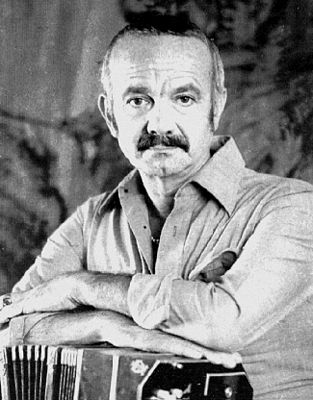
Histoire du Tango attempts to convey the history and evolution of the tango in four movements: Bordel 1900, Café 1930, Nightclub 1960, and Concert d’aujourd’hui. Piazzolla provided program notes that expand on the individual movement including Bordel, 1900:
“The tango originated in Buenos Aires in 1882. It was first played on the guitar and flute. Arrangements then came to include the piano, and later, the concertina. This music is full of grace and liveliness. It paints a picture of the good natured chatter of the French, Italian, and Spanish women who peopled those bordellos as they teased the policemen, thieves, sailors, and riffraff who came to see them. This is a high-spirited tango.”
Astor Piazzolla, an Argentine musician and composer, revolutionized traditional tango by blending jazz and classical elements. Gifted with the bandoneon since childhood, he formed his own orchestra in 1946, exploring new sounds and structures. Winning a composing contest in 1951 for his symphonic piece “Buenos Aires,” he studied in Paris, urged by Nadia Boulanger to stay true to his experimental style. Despite criticism from traditionalists, Piazzolla combined classical composition with tango, forming the influential Quinteto Nuevo Tango in 1960. Initially met with resistance in Argentina, his innovations gained acclaim in the United States and Europe, influencing a new generation of composers. His compositions, including a concerto for bandoneón and orchestra and “Five Tango Sensations,” continue to resonate in film, television, and commercials.
PERFORMER BIOS
Oliver Molina

Dr. Oliver Molina is an Associate Professor of Music where he serves as an Assistant Director of Bands and Director of Percussion Studies at Northwestern State University of Louisiana. As an active percussion performer, educator, arranger, adjudicator, and clinician, Dr. Molina has presented and performed at various state Day of Percussion events, PASIC, NCPP, and other music conferences and festivals. He earned his Doctor of Musical Arts degree in Percussion Performance and Pedagogy at the University of Iowa under Dr. Dan Moore. Additionally, he is a founding member of the Omojo Percussion Duo and the Ninkasi Percussion Group. Dr. Molina currently serves as Chair for PAS Education Committee and as Treasurer of the Louisiana PAS Chapter. He is a Yamaha Performing Artist and an education endorser of Vic Firth Sticks and Mallets, Remo Drum Heads, Sabian Cymbals, and Black Swamp Percussion. His professional affiliations include the Percussive Arts Society, National Association for Music Education, National Society for Steel Band Educators, and the College Music Society.
Lisa Wolynec
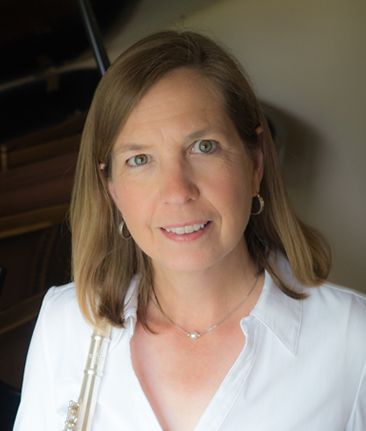
As an orchestral musician, Lisa Wolynec is a principal of the critically acclaimed Gateway Chamber Orchestra, with whom she premiered Lee Hoiby’s Flute Concerto, and principal of the Paducah Symphony. She has also performed with the Baton Rouge Symphony, Knoxville Symphony, Owensboro Symphony, the Nashville Opera, and has been a guest soloist with the Gateway Chamber Orchestra, the Dallas Chamber Orchestra and the Paducah Symphony. She has been a winner in various competitions including the Texas Flute Society Concerto Competition, the National Flute Association Orchestral Competition, the NFA Convention Performers Competition and she was a semi-finalist in the NFA Young Artist Competition.
As Professor of Flute at Austin Peay State University, she has built and maintained a vibrant studio with students going on to prominent graduate programs and excellent teaching positions. She has hosted residencies by flutists such as William Bennett, Lorna McGhee, and Rhonda Larson and is the Director of the William Bennett Summer Flute Academy. As a member of the Mid-South Flute Society, she has served on the Board of Directors, as Competition Coordinator, Program Chair, and President.
 OLIVER MOLINA